
10. One of the metals below will react violently when put in water. Which one?

  • A. Aluminium
  • B. Copper
  • C. Potassium
  • D. Iron

11. Which of these lists has metals in the correct order from most reactive to least reactive?

  • A. sodium, zinc, copper
  • B. zinc, copper, sodium
  • C. iron, sodium, copper
  • D. sodium, copper, zinc

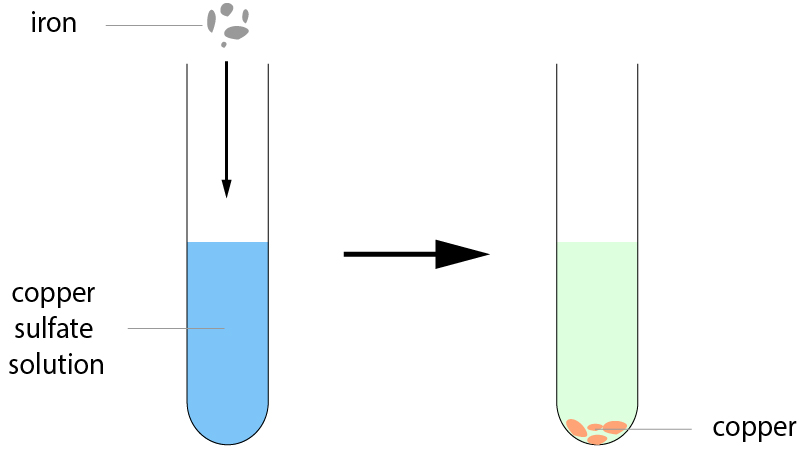
12-15. When iron pieces are added to copper sulfate, a reaction occurs and copper metal is left at the bottom of the tube:

iron added to copper sulfate solution

12. Which sentence best describes why this happens?

  • A. Iron is more reactive than sulphur.
  • B. Iron is more reactive than copper.
  • C. Copper is more reactive than sulphur.
  • D. Copper is more reactive than iron.

13. What is the name given to this kind of reaction?

  • A. Neutralisation reaction.
  • B. Displacement reacton.
  • C. Combustion.
  • D. Thermal decomposition.

14. Which of these word equations correctly shows this reaction?

  • A. iron + copper sulfate copper + hydrogen + water
  • B. iron + copper sulfate copper + a salt + water
  • C. iron + copper sulfate copper + iron + sulfur
  • D. iron + copper sulfate copper + iron sulfate

15. The test tube in this experiment gets hot - the chemical reaction produces heat energy. What is this kind of reaction called?

  • A. endothermic
  • B. exothermic
  • C. thermal decomposition
  • D. neutralisation


16. If carbon is added to a metal oxide and heated, then it can displace the metal producing carbon dioxide and a pure metal.

However, only one of the reactions below can occur . Which one?

  • A. carbon + sodium oxide sodium + carbon dioxide
  • B. carbon + magnesium oxide magnesium + carbon dioxide
  • C. carbon + aluminium oxide aluminium + carbon dioxide
  • D. carbon + iron oxide iron + carbon dioxide