

Chemistry CIE iGCSE:Organic 2
Page 2
11. The name of the salt formed in the reaction between magnesium and butanoic acid is ….
|
||
12. The equation for the reaction between methanoic acid and sodium is ….
|
||
Q13-15: Esters are volatile compounds with distinctive smells and can be used in perfumes. |
 |
|
13. The functional group of an ester is …
|
||
14. The formulas of 2 compounds X and Y are: Compound X: CH3CH2OH Compound Y: CH3CH2CH2COOH |
||
Compounds X and Y react together to produce the ester …
|
||
| 15. The formula of an ester found in some fruits is shown below:
|
||
The names of the carboxylic acid and alcohol which reacted together to produce this ester are …
|
||
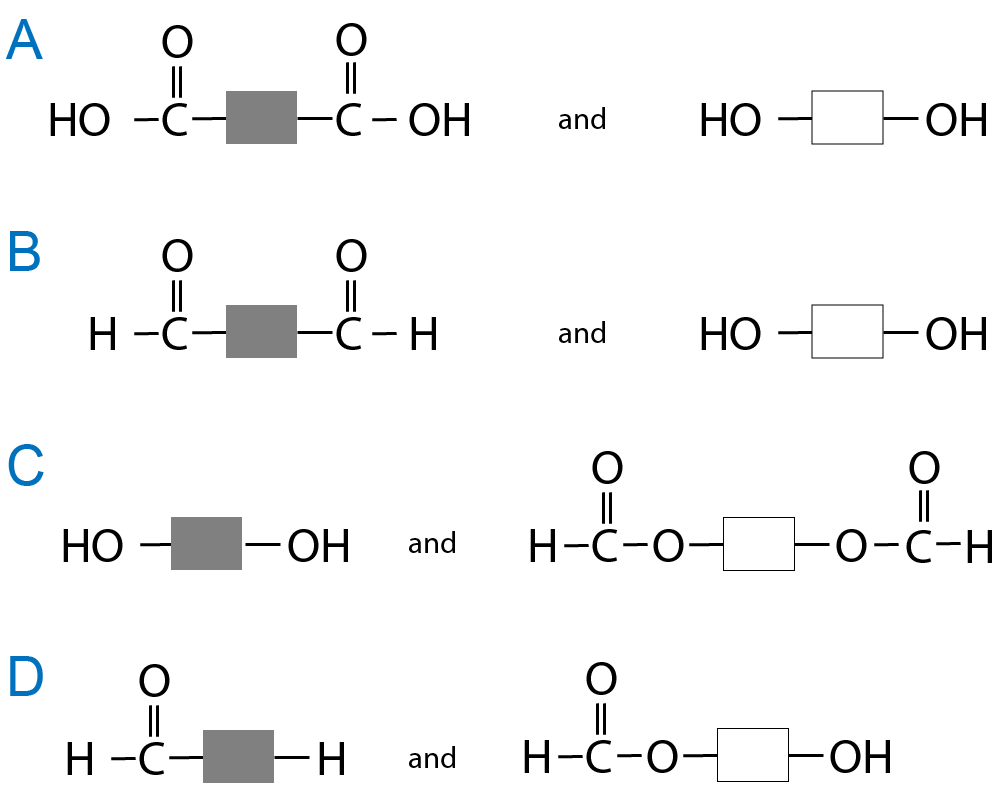
| 16. Polyesters, such as terylene, are condensation polymers produced for use in the garment industry.
A section of a polyester chain is shown below:
The two monomers used to form this polyester are: |
 |
|
 |
||
| 17. The molecule shown here is obtained from corn starch and can be used to make a biodegradable polymer, PLA. | 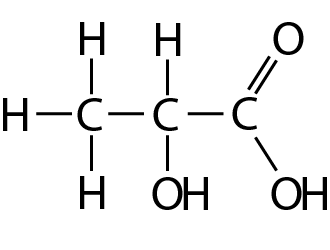 |
|
What functional groups does this molecule contain?
|
||
18. Crude oil can be converted to ethanoic acid as shown in the following flow chart: Crude oil → kerosene → ethene → ethanol → ethanoic acid The four processes used are:
|
||
In what order are these processes used?
|
||
19. Which of the following are NOT correct about proteins?
|
||
20. The products of hydrolysis of carbohydrates and proteins can be separated and identified using:
|
||


