11. Which statement is NOT true about Group I elements?
- A. They are relatively soft metals which can be cut with a knife
- B. They form ions with a 1- charge
- C. They react rapidly with water forming hydrogen gas
- D. They have relatively low melting points
|
|
12. Which row is true for the trends down Group 1?
| |
Melting Point |
Density |
| A |
increases |
decreases |
| B |
increases |
increases |
| C |
decreases |
decreases |
| D |
decreases |
increases |
|
|
Q13-14:
Rubidium is below potassium in Group I. A small piece of rubidium was added to a trough of water containing some universal indicator.

|
|
13. Which observations you would expect to make during this reaction?
- A. rubidium fizzes slowly and the indicator turns red
- B. rubidium fizzes slowly and the indicator turns blue
- C. rubidium fizzes very quickly and the indicator turns red
- D. rubidium fizzes very quickly and the indicator turns blue
|
|
14. The correct chemical equation for the reaction between rubidium and water is..
- A. Rb + H2O → RbOH + H2
- B. 2Rb + 2H2O → 2RbOH + H2
- C. Rb + H2O → Rb2O + H2
- D. 2Rb + H2O → Rb2O + H2
|
|
15. Astatine is the element below iodine in Group VII.
Which row shows the most likely properties of astatine at room temperature?
| |
Colour |
State |
Reactivity compared to
other Group VII elements |
| A |
green |
gas |
More reactive |
| B |
black |
solid |
more reactive |
| C |
black |
gas |
less reactive |
| D |
black |
solid |
Less reactive |
|
|
16. Samples of different halogens were added in turn to different halide solutions. Which of the following are correct results?
| I. Chlorine reacted with sodium bromide solution to produce bromine |
| II. Iodine reacted with lithium chloride solution to produce chlorine |
| III. Bromine reacted with potassium iodide solution to produce iodine |
|
|
- A. I and II only
- B. I and III only
- C. II and III only
- D. I, II and III
|
|
| 17. The ionic equation for the reaction between bromine and iron(II) ions is:
Br2 + 2Fe2+ → 2Br- + 2Fe3+
Select the statement which is true about this reaction.
- A. bromine is oxidized because it gains electrons
- B. bromine is reduced because it loses electrons
- C. iron(II) ions are oxidized because they lose electrons
- D. iron(II) ions are reduced because they gain electrons
|
|
Q18-20:
When chlorine gas is bubbled through colorless potassium iodide solution a brown solution is formed. |
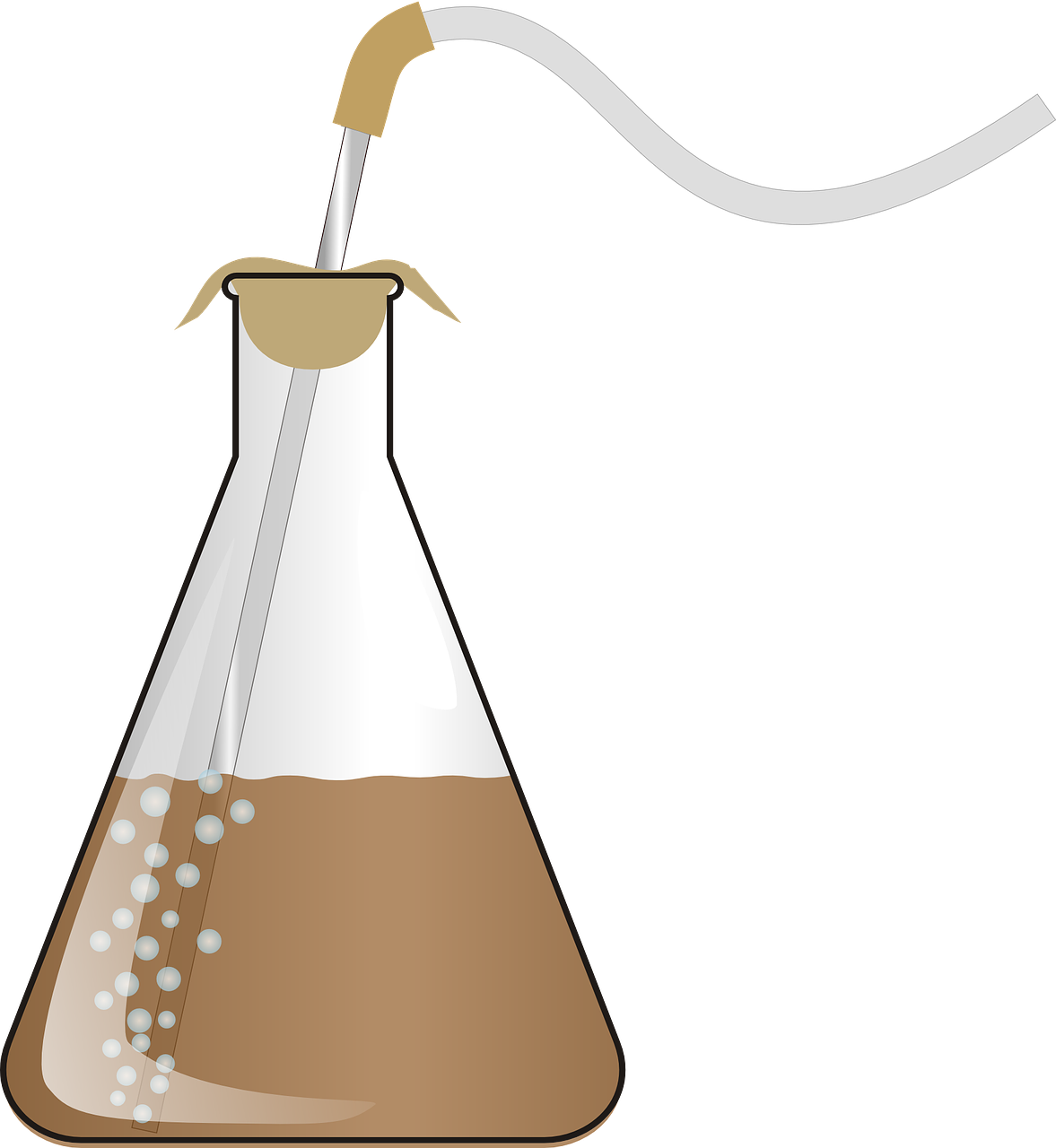 |
18. The word equation for this reaction is..
- A. chlorine + potassium iodide → iodide + potassium chlorine
- B. chlorine + potassium iodide → iodine + potassium chloride
- C. chlorine + potassium iodide → potassium + chlorine iodide
- D. chlorine + potassium iodide → potassium + iodine chloride
|
|
19. What type of reaction is the reaction in Q18?
- A. precipitation
- B. substitution
- C. displacement
- D. neutralization
|
|
20. This reaction shows that..
- A. chlorine is more reactive than iodine
- B. iodine is more reactive than chlorine
- C. chlorine is more reactive than potassium iodide
- D. potassium iodide is more reactive than chlorine
|
|
|